
PPF for EVs Malaysia is becoming a priority for owners as electric vehicle adoption surges nationwide. EV sales rose by 106% year-on-year in the first half of 2026, and the Malaysian Automotive Association now expects EVs to make up a growing share of total industry sales for the year. If you’ve just picked up a Proton eMas, Tesla, or BYD, protecting that investment matters — and that’s exactly what this guide to PPF for EVs Malaysia covers.
PPF for EVs Malaysia: Complete Guide & Cost (2026)
Electric vehicles aren’t just “regular cars with a different engine.” Their body panels, paint processes, and daily usage habits create a few unique considerations that don’t apply to petrol vehicles. Below, we break down everything EV owners in Malaysia should know before booking a PPF installation.
Why PPF for EVs Malaysia Matters More Than You Think
Some new EV owners assume that because their car has no engine noise or exhaust, it somehow needs less protection. In reality, the opposite is often true — which is exactly why PPF for EVs Malaysia is becoming a common search among new owners.
1. Thinner, More Delicate Paint Finishes
Many EV manufacturers use lighter-weight body panels and thinner paint layers to reduce overall vehicle weight and improve range efficiency. Thinner paint means less natural resistance to stone chips, swirl marks, and everyday scuffs — making a sacrificial layer like Paint Protection Film more valuable, not less.
2. Higher Resale Stakes
EVs in Malaysia are still a relatively new and closely watched segment of the used car market. Buyers shopping for a secondhand EV tend to scrutinise paint condition closely, since it signals how well the battery and other components were likely cared for too. A well-preserved exterior supports stronger resale value.
3. Frequent Charging Station Visits
Public and semi-public charging bays often mean tighter parking, more foot traffic, and more opportunities for door dings, trolley scrapes, and careless passers-by brushing against your car. PPF on high-contact panels like doors, mirrors, and rear bumpers helps absorb this everyday wear.
4. Silent Operation Means More City and Mall Driving
Because EVs are quiet and cost-efficient to run short distances, many owners use them more frequently for city errands, mall runs, and stop-start traffic — all environments where paint takes more low-speed contact damage than highway stone chips.
Where EV-Specific PPF Considerations Differ From Petrol Cars
Charging Port Area Protection
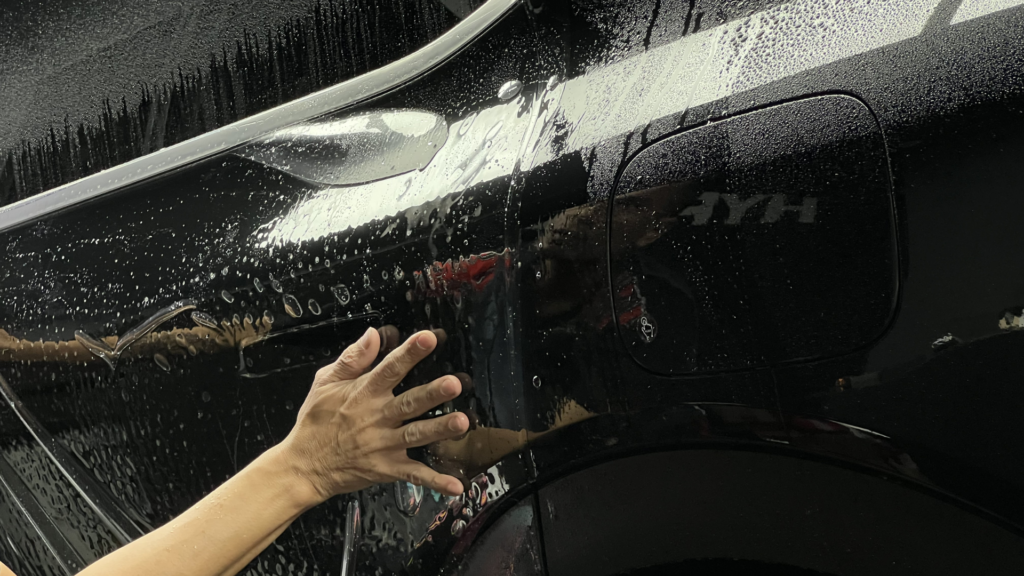
The charging port flap and surrounding panel see repeated opening, closing, and cable contact — far more than a fuel cap ever would. This area benefits from targeted PPF coverage to prevent scuffing around the port edge from repeated cable insertion and removal.
Aerodynamic Panels and Underbody Trims
EVs are designed with more aggressive aerodynamic elements — smooth underbody panels, closed-off grilles, and lower front lips — to maximise range. These panels sit closer to the road and are more exposed to stone chips and scraping on Malaysia’s uneven road surfaces, particularly around speed bumps and driveway inclines.
Heat Considerations Near the Battery Pack
PPF itself does not interfere with battery cooling systems, but installers should avoid covering factory-designed ventilation points on the underbody or wheel arch liners. A detailer experienced with EVs will know which panels are safe to wrap and which need to remain uncovered for proper airflow.
Frunk (Front Trunk) and Panel Gaps
Many EVs feature a front trunk in place of an engine bay, which changes the panel layout and gap lines compared to a traditional petrol car. Installers need to account for this when wrapping the front clip to maintain a clean, edge-free finish.
Which Areas Should EV Owners Prioritise?
If a full-body wrap isn’t in the budget right away, here’s a practical priority order:
- Front bumper, bonnet, and fenders — the highest-impact zone for stone chips on any vehicle
- Charging port panel — protects against scuffs from daily cable use
- Door edges and lower doors — reduces damage from car park dings and charging bay contact
- Side mirrors — a common site for scrapes in tight parking
- Rear bumper — protects against low-speed reversing knocks, especially relevant for EVs frequently parked in charging bays
PPF vs Ceramic Coating for EVs
The same core comparison applies to EVs as it does to petrol cars — PPF offers physical impact protection while ceramic coating offers a hydrophobic, glossy finish with less physical durability. For a full side-by-side breakdown, see our detailed PPF vs Ceramic Coating Malaysia guide. Many EV owners in Malaysia opt for a hybrid approach: PPF on the front-facing, high-impact panels, paired with ceramic coating over the rest of the body for easier washing and long-term shine.
How Much Does PPF for EVs Malaysia Cost?
Pricing generally sits in a similar range to petrol vehicles of comparable size, though EVs with larger panel surfaces (such as three-row SUVs or larger sedans) may cost slightly more due to material usage:
- Partial front coverage: RM1,500 – RM4,500
- Full front end (bonnet, bumper, fenders, mirrors): RM3,000 – RM6,000
- Full vehicle wrap: RM6,000 – RM16,000, depending on film brand and panel complexity
Costs vary based on film brand, installer expertise, and whether additional areas like the charging port panel or frunk lid are included. For current brand comparisons, check our Best PPF Brands Malaysia guide.
Choosing an Installer for Your EV
Not every detailing shop has experience working around EV-specific components. Before booking, it’s worth asking:
- Have they worked on your specific EV model or brand before?
- Do they know which underbody and wheel arch areas must stay uncovered for battery cooling?
- Can they show examples of charging port panel wrapping?
- What warranty do they offer against yellowing, lifting, and cracking?
Working with a detailer who understands both traditional PPF application and the layout quirks of EVs will give a cleaner result and avoid accidentally interfering with ventilation or sensor components.
Final Thoughts on PPF for EVs Malaysia
As EV ownership continues to climb across Malaysia, protecting your investment goes beyond just charging habits and battery care — the exterior paint matters just as much for long-term value and appearance. PPF remains one of the most effective ways to shield an EV’s thinner paint finish from Malaysia’s stone chips, UV exposure, and daily parking hazards, while supporting stronger resale value down the line.
If you’re considering PPF for EVs Malaysia, our team can walk you through panel-by-panel coverage options suited to your specific model. Explore HYPEX Detailing Services or get in touch via WhatsApp to discuss a coverage plan for your vehicle.
Frequently Asked Questions
Does PPF affect EV battery cooling or charging?
No. When installed correctly by an experienced detailer, PPF does not cover or block factory ventilation points needed for battery cooling.
Is PPF more necessary for EVs than petrol cars?
It isn’t strictly more necessary, but many EVs use thinner paint and lighter body panels, which can make them more susceptible to stone chips and scuffing — making PPF a worthwhile consideration.
Can PPF be applied around the charging port?
Yes. Experienced installers can wrap the charging port panel and surrounding area to reduce scuffing from repeated cable use.
Should I do PPF before or after my first service?
It’s generally fine to install PPF shortly after delivery, as long as the paint has fully cured. Ask your installer or dealer about the recommended waiting period for your specific model.
Related Guides
- Paint Protection Film Malaysia Guide (2026)
- PPF vs Ceramic Coating Malaysia: Which Is Better?
- Best PPF Brands Malaysia (2026)
- EV Cars Section
Pingback: Why Your EV Needs Window Film (2026)
Pingback: How Soon After Delivery Should You Get PPF or Ceramic Coating