
EV battery lifespan Malaysia is one of the biggest concerns for drivers considering buying an electric vehicle.
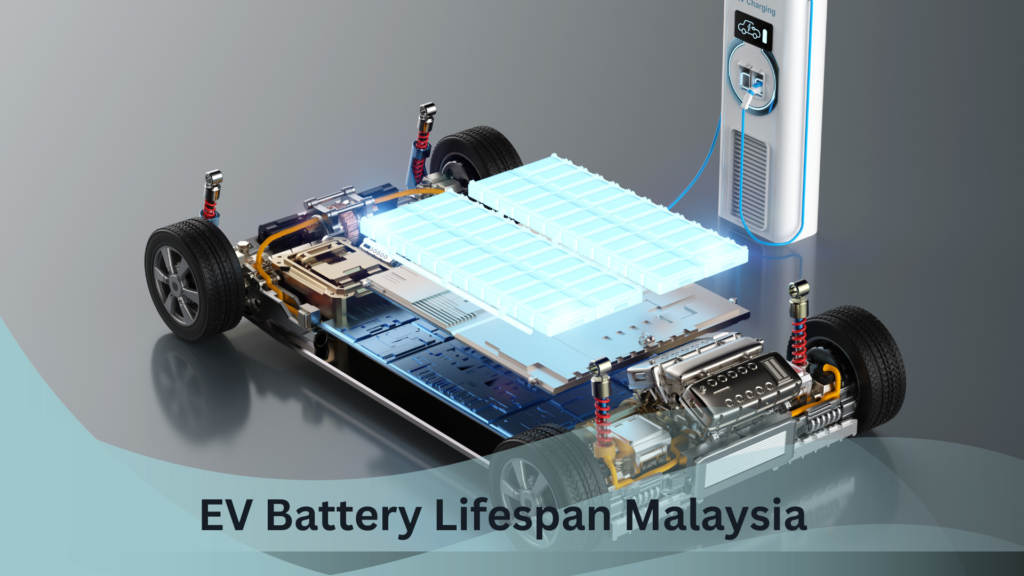
Potential buyers often ask whether an EV battery will last 5 years, 10 years or longer, how quickly battery capacity decreases and how much it could cost if the battery eventually needs replacement.
These concerns are understandable because the high-voltage battery is one of the most expensive components of an electric vehicle.
However, battery degradation, battery failure and battery replacement are three different issues.
Modern EV batteries are designed to remain usable for many years, and most manufacturers provide long-term battery warranties.
This guide explains how long EV batteries can last, what causes battery degradation, how Malaysia’s hot climate may affect battery health and what owners can do to extend battery lifespan.
How Long Do EV Batteries Typically Last?
There is no single lifespan that applies to every EV battery.
Battery durability depends on:
- Battery chemistry
- Battery thermal management
- Driving conditions
- Charging habits
- Climate
- Vehicle mileage
- Battery age
- Manufacturer engineering
Modern electric vehicle batteries are generally designed to remain usable for many years.
Many EV manufacturers provide battery warranties of approximately 8 years or a specified mileage limit.
However, reaching the end of the battery warranty does not mean the battery will immediately fail.
An EV battery may continue operating beyond its warranty period with reduced usable capacity.
EV Battery Lifespan vs EV Battery Warranty
Battery lifespan and battery warranty should not be confused.
Battery Lifespan
Battery lifespan refers to how long the battery remains useful before degradation or technical problems significantly affect vehicle usability.
Battery Warranty
Battery warranty refers to the manufacturer’s contractual coverage.
The warranty may specify:
- Number of years
- Mileage limit
- Minimum battery health
- Manufacturing defects
- Terms and exclusions
Always read the warranty terms for the specific EV model before purchasing.
What Is EV Battery Degradation?
Battery degradation is the gradual reduction in the amount of energy an EV battery can store.
For example, consider an electric vehicle that originally provides 450 km of usable driving range.
After several years, battery degradation may reduce the usable range.
The vehicle may still operate normally but cannot travel as far on a full charge as when it was new.
Battery degradation is a normal ageing process.
It does not automatically mean the battery is defective.
How Fast Do EV Batteries Degrade?
There is no universal degradation rate.
The rate depends on battery chemistry, climate, thermal management, charging habits and vehicle usage.
Battery degradation may also be faster during certain periods of battery life and slower during others.
Owners should avoid assuming that a battery will lose exactly the same percentage of capacity every year.
The best way to evaluate a used EV battery is through battery health information and a professional vehicle inspection.
Does Malaysia’s Hot Climate Damage EV Batteries?
Temperature is an important factor affecting lithium-ion batteries.
Malaysia has:
- High temperatures
- High humidity
- Strong sunlight
- Year-round warm weather
Extended exposure to high battery temperatures can accelerate battery ageing.
However, many modern electric vehicles use active battery thermal management systems.
These systems help control battery temperature during:
- Driving
- Charging
- DC fast charging
- High-performance use
The quality of the thermal management system is therefore an important factor when evaluating an EV.
Air-Cooled vs Liquid-Cooled EV Batteries
Different EVs use different battery cooling systems.
Air-Cooled Batteries
Air-cooled battery systems use airflow to manage battery temperature.
Advantages may include:
- Simpler design
- Lower system complexity
However, temperature control may be less precise under demanding conditions.
Liquid-Cooled Batteries
Many modern EVs use liquid-based thermal management.
Potential advantages include:
- Better temperature control
- More consistent fast-charging performance
- Improved thermal management during demanding driving conditions
Battery cooling technology should be considered together with battery chemistry and overall vehicle engineering.
Does DC Fast Charging Damage EV Batteries?
DC fast charging allows drivers to add energy much faster than normal AC charging.
This is particularly useful for long-distance journeys.
However, fast charging can generate additional heat.
Modern EVs use battery management systems to control:
- Charging power
- Battery temperature
- Voltage
- Current
- State of charge
Occasional DC fast charging is a normal part of EV ownership.
Battery ageing depends on multiple factors, and drivers should not assume that using a DC charger will immediately damage the battery.
For routine daily use, home AC charging can be a convenient charging method when available.
Should You Charge An EV To 100% Every Day?
The correct charging routine depends on battery chemistry and manufacturer recommendations.
Some manufacturers recommend setting a lower daily charging limit for EVs using certain nickel-based lithium-ion battery chemistries.
Vehicles using Lithium Iron Phosphate, commonly known as LFP batteries, may have different charging recommendations.
Always follow the vehicle manufacturer’s charging instructions.
Is Charging To 0% Bad For EV Batteries?
Regularly leaving an EV at an extremely low state of charge for extended periods is generally not recommended.
The vehicle’s battery management system normally maintains protective buffers that prevent drivers from accessing the battery’s entire physical capacity.
However, owners should still avoid unnecessarily leaving the vehicle with a very low battery level for long periods.
What Is The Best Daily Charging Range?
There is no single charging range suitable for every electric vehicle.
A commonly discussed strategy for certain EV batteries is to maintain the battery within a moderate state-of-charge range during normal daily use.
However, battery chemistry and manufacturer recommendations vary.
The best practice is to:
- Follow manufacturer guidance
- Use scheduled charging where useful
- Avoid unnecessary extreme battery temperatures
- Avoid leaving the battery at very high or very low states of charge for extended periods when the manufacturer advises against it
EV Battery Chemistry Explained
Understanding battery chemistry can help buyers compare electric vehicles.
NMC Batteries
Nickel Manganese Cobalt batteries are commonly used in electric vehicles.
Advantages can include:
- High energy density
- Longer driving range for a given battery size
- Strong performance
NCA Batteries
Nickel Cobalt Aluminium batteries are used in some electric vehicles.
They can provide high energy density and strong performance.
LFP Batteries
Lithium Iron Phosphate batteries have become increasingly popular.
Advantages can include:
- Strong thermal stability
- Long cycle life
- Lower reliance on nickel and cobalt
Different battery chemistries involve trade-offs in energy density, cost, charging characteristics and performance.
What Are The Signs Of EV Battery Degradation?
Possible signs include:
- Reduced driving range
- More frequent charging
- Lower usable battery capacity
- Significant difference between displayed and expected range
However, reduced driving range does not always indicate battery degradation.
Range can also be affected by:
- High driving speeds
- Tyre pressure
- Weather
- Air-conditioning use
- Driving style
- Vehicle load
A professional battery health assessment provides better information than driving range alone.
What Is State Of Health (SOH)?
State of Health, or SOH, is an estimate of the battery’s current condition compared with its original condition.
For example, a battery with an SOH of 90% may retain approximately 90% of its original capacity, depending on how the manufacturer calculates the measurement.
SOH can be particularly important when purchasing a used electric vehicle.
However, battery health measurements and diagnostic methods can vary between manufacturers.
Should You Buy A Used EV?
A used EV can provide good value, but battery condition should be inspected before purchase.
Check:
- Remaining battery warranty
- Vehicle mileage
- Service history
- Accident history
- Charging history where available
- Battery State of Health
- DC fast-charging performance
- Warning lights or diagnostic codes
Do not evaluate a used EV only by its age and mileage.
Battery condition and warranty coverage can significantly affect long-term ownership value.
How Much Does EV Battery Replacement Cost In Malaysia?
There is no single EV battery replacement price.
The cost depends on:
- Vehicle model
- Battery capacity
- Battery chemistry
- Manufacturer
- Labour costs
- Availability of replacement parts
- Whether individual battery modules can be repaired or replaced
- Warranty coverage
A complete battery pack replacement can be expensive.
However, owners should not assume that every battery-related problem requires replacing the entire battery pack.
Depending on the vehicle and manufacturer repair procedures, some battery systems may allow:
- Module replacement
- Component repairs
- Battery management system repairs
- Cooling system repairs
Always obtain an official diagnosis before assuming that a full battery replacement is required.
What Happens When The Battery Warranty Ends?
The end of the battery warranty does not mean the battery stops working.
The vehicle can continue to operate as long as the battery remains functional.
However, owners become financially responsible for repairs that are no longer covered by warranty.
Before buying an EV, consider:
- Battery warranty length
- Mileage limit
- Battery health guarantee
- Manufacturer service network
- Replacement part availability
- Long-term repair support
Can EV Batteries Be Recycled?
EV batteries can potentially be reused, repurposed or recycled.
A battery that no longer meets automotive performance requirements may still have useful capacity for stationary energy storage applications.
Battery recycling processes can also recover valuable materials.
As EV adoption grows, battery recycling and second-life battery industries are expected to become increasingly important.
How To Extend EV Battery Lifespan
EV owners can follow several practical habits.
Follow Manufacturer Charging Recommendations
Different battery chemistries may require different charging routines.
Use Home AC Charging When Convenient
Home charging can provide a practical solution for daily use.
Use DC Fast Charging When Needed
Fast charging is valuable for long-distance travel, but not every charging session needs to use the fastest available charger.
Avoid Long-Term Extreme States Of Charge
Follow manufacturer recommendations regarding leaving the vehicle at very high or very low battery levels.
Avoid Excessive Battery Heat
Whenever practical, avoid unnecessarily exposing the vehicle to extreme heat for extended periods.
Maintain The Vehicle Properly
Battery cooling systems and other vehicle components should be maintained according to the manufacturer’s service schedule.
EV Battery vs Petrol Engine Lifespan
Comparing an EV battery directly with a petrol engine is difficult.
Both technologies can last many years with proper engineering and maintenance.
A petrol vehicle may eventually require repairs involving:
- Engine components
- Transmission
- Cooling system
- Fuel system
- Exhaust system
An electric vehicle may eventually require repairs involving:
- High-voltage battery
- Electric motors
- Power electronics
- Charging system
- Thermal management system
The long-term reliability of a vehicle depends on the specific model, engineering quality, usage and maintenance.
Should Battery Lifespan Stop You From Buying An EV?
Battery lifespan should be considered before buying an electric vehicle, but it should not be evaluated in isolation.
Buyers should compare:
- Battery chemistry
- Battery warranty
- Thermal management
- Manufacturer reputation
- Service network
- Vehicle price
- Charging performance
- Expected ownership period
For many buyers, the battery warranty may cover a significant portion of the planned ownership period.
Frequently Asked Questions
How Many Years Does An EV Battery Last?
There is no fixed lifespan for every EV battery.
Modern batteries are designed for long-term use, and many manufacturers provide warranties of approximately eight years or a specified mileage limit.
The battery may continue operating beyond the warranty period.
Do EV Batteries Need To Be Replaced After 8 Years?
No.
The end of an eight-year warranty does not mean the battery automatically requires replacement.
Battery health depends on usage, chemistry, temperature management, age and other factors.
Does Malaysia’s Hot Weather Reduce EV Battery Life?
High temperatures can accelerate battery ageing.
However, modern EV thermal management systems are designed to control battery temperatures.
Battery engineering and thermal management should be considered when choosing an EV.
Is Frequent DC Fast Charging Bad?
Fast charging can generate more heat, but modern EVs manage charging speed and temperature through battery management systems.
Drivers should follow manufacturer recommendations and use the charging method that suits their driving requirements.
How Can I Check A Used EV Battery?
Request battery health information where available and obtain a professional inspection.
Check remaining battery warranty, service history, diagnostic codes and State of Health information.
Is EV Battery Replacement Expensive?
A complete battery replacement can be expensive, but costs vary significantly between vehicles.
Not every battery problem requires replacing the complete battery pack.
Final Verdict
EV battery lifespan Malaysia is an important consideration for anyone planning to purchase a new or used electric vehicle.
Modern EV batteries are designed to remain usable for many years, and battery degradation should not be confused with complete battery failure.
Battery chemistry, thermal management, charging habits, climate, vehicle usage and manufacturer engineering all affect long-term battery health.
Before purchasing an EV, compare the battery warranty, thermal management system, manufacturer service support and expected ownership period.
For existing EV owners, following manufacturer charging recommendations and maintaining the vehicle properly can help support long-term battery performance.
Pingback: BYD Seal Review Malaysia (2026): Price, Range & Verdict
Pingback: Tesla Model 3 Review Malaysia (2026): Price, Range & Verdict
Pingback: Can Electric Cars Catch Fire? Everything You Need to Know