
EV charging in Malaysia has become increasingly important as more drivers switch from petrol vehicles to electric cars.
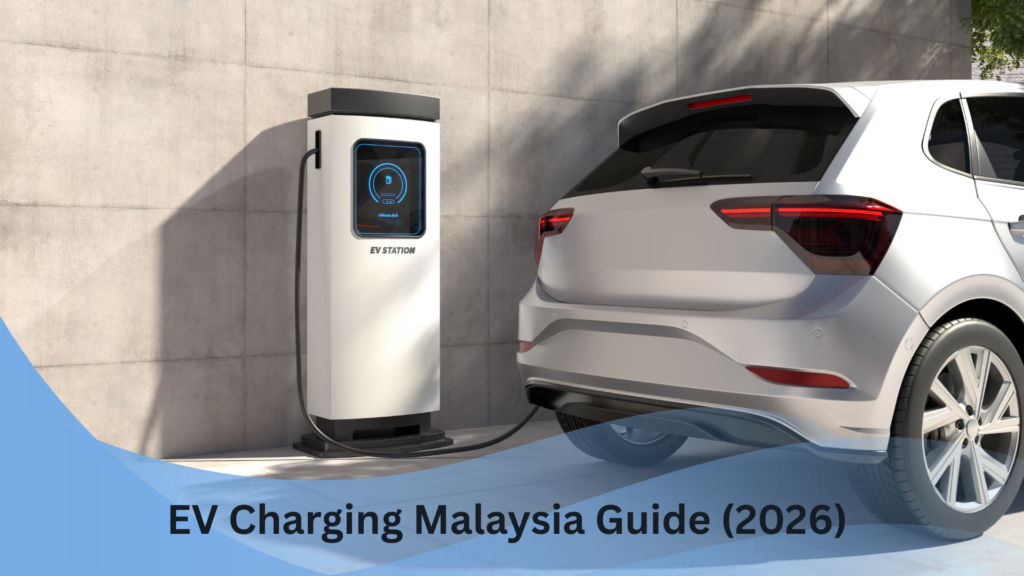
For first-time EV buyers, understanding how charging works can be confusing. Questions about home chargers, public charging stations, AC charging, DC fast charging, charging time and electricity costs are common.
The good news is that charging an electric vehicle is relatively straightforward once you understand the basics.
This complete EV charging Malaysia guide explains how to charge an electric car, the differences between AC and DC charging, approximate charging costs and what Malaysian drivers should consider before buying an EV.
How Does EV Charging Work?
Electric vehicles store energy inside a high-voltage battery pack.
When the vehicle is connected to a charger, electricity flows into the battery and increases its state of charge.
There are two main ways to charge an electric vehicle:
- AC charging
- DC fast charging
The charging speed depends on the charger output, vehicle onboard charger, battery capacity, battery temperature and battery state of charge.
AC Charging vs DC Fast Charging
Understanding the difference between AC and DC charging is essential for EV owners.
AC Charging
Alternating Current charging is commonly used at:
- Homes
- Condominiums
- Offices
- Shopping centres
- Hotels
- Long-term parking locations
When using an AC charger, the vehicle’s onboard charger converts AC electricity into DC electricity before storing it in the battery.
Common AC charging speeds include:
- 3.7 kW
- 7 kW
- 11 kW
- 22 kW
The actual charging speed depends on the maximum AC charging capability supported by the vehicle.
DC Fast Charging
DC chargers deliver electricity directly to the vehicle’s battery.
They are significantly faster than most AC chargers and are commonly installed at:
- Highway rest areas
- Petrol stations
- Dedicated charging hubs
- Shopping centres
- Strategic urban locations
Common DC charging outputs include:
- 30 kW
- 50 kW
- 100 kW
- 150 kW
- 180 kW
- 250 kW and above
However, connecting a vehicle to a 250 kW charger does not mean the car will continuously charge at 250 kW.
The maximum charging speed is limited by the vehicle and its battery management system.
What Is The Best Way To Charge An EV?
For most Malaysian EV owners, the most convenient charging strategy is:
Home AC charging for normal daily driving.
Public DC fast charging for long-distance journeys or when faster charging is required.
This approach can provide a balance between convenience, charging cost and battery management.
Home EV Charging In Malaysia
Home charging is one of the biggest advantages of EV ownership.
Instead of visiting a petrol station, owners can plug in their vehicles after returning home and start the next day with sufficient battery capacity.
Three-Pin Plug Charging
Some EVs can be charged using a portable charging cable connected to a suitable household electrical outlet.
However, charging speeds are relatively slow.
Depending on battery capacity, a full charge may require more than 20 hours.
Owners should ensure the electrical installation and socket used are suitable for continuous high electrical loads.
Dedicated Wallbox Charger
A dedicated home wallbox is the preferred solution for many EV owners.
Common residential wallbox outputs include:
- 7 kW single-phase charging
- 11 kW three-phase charging
- 22 kW three-phase charging
Before installing a home charger, owners should check:
- Available electrical supply
- Maximum demand
- Cable requirements
- Circuit protection
- Charger location
- Installation cost
- Vehicle AC charging capability
The charger should be installed by a qualified electrical contractor.
How Long Does It Take To Charge An EV?
Charging time depends primarily on battery capacity and charging power.
For example, consider an EV with a 60 kWh battery.
Using A 7 kW AC Charger
A theoretical full charge could take approximately 8 to 10 hours after accounting for charging losses and variations in charging speed.
Using An 11 kW AC Charger
Charging time could be approximately 6 to 7 hours if the vehicle supports 11 kW AC charging.
Using A 50 kW DC Charger
Charging from 10% to 80% may take approximately 45 to 70 minutes depending on the vehicle.
Using A 150 kW DC Charger
Compatible EVs may complete a 10% to 80% charging session in approximately 25 to 40 minutes.
These are general estimates.
Actual charging time varies significantly between vehicles because of battery temperature, charging curves and maximum supported charging power.
Why Does EV Charging Slow Down After 80%?
EV batteries generally do not charge at their maximum rate throughout an entire charging session.
Charging speeds are usually higher when the battery has a lower state of charge.
As the battery approaches 80% or higher, the battery management system may gradually reduce charging power.
This process helps manage battery temperature and protect battery health.
For long-distance journeys, charging from approximately 10% to 80% can often be more time-efficient than waiting for the battery to reach 100%.
How Much Does It Cost To Charge An EV In Malaysia?
EV charging costs depend on where and how the vehicle is charged.
Home Charging
Home charging costs depend on:
- Electricity tariff
- Battery capacity
- Energy consumption
- Charging losses
- Household electricity usage
To estimate charging cost:
Battery Energy Added × Electricity Rate = Approximate Charging Cost
For example, adding 50 kWh of electricity at an assumed rate of RM0.50 per kWh would cost approximately RM25 before considering charging losses.
Public AC Charging
Public AC chargers may use different pricing structures, including:
- Per kWh
- Per minute
- Flat parking fees
- Membership plans
Public DC Fast Charging
DC fast charging generally costs more than home charging because of infrastructure, equipment and operating costs.
Pricing varies between charging operators and locations.
Always check the charging application before starting a session.
Major EV Charging Networks In Malaysia
Malaysia has multiple public charging networks.
Depending on location and vehicle compatibility, EV drivers may encounter charging services operated by companies such as:
- Gentari
- JomCharge
- chargEV
- Tesla Supercharger
- Shell Recharge
- ChargeSini
Drivers should consider installing several charging applications because charger availability, pricing and network coverage vary.
EV Charging Connectors In Malaysia
Understanding connector types can help new EV owners avoid confusion.
Type 2
Type 2 is widely used for AC charging.
Most modern EVs sold in Malaysia support Type 2 AC charging.
CCS2
Combined Charging System 2, commonly known as CCS2, is widely used for DC fast charging.
Many EV models sold in Malaysia use CCS2.
CHAdeMO
CHAdeMO is another DC fast-charging standard.
It is found primarily on some older Japanese electric vehicles.
CCS2 has become more common among newer EV models sold in Malaysia.
Can You Install An EV Charger At A Condominium?
Yes, but the process may be more complicated than installing a charger at a landed property.
Condominium residents may need to consider:
- Joint Management Body or Management Corporation approval
- Electrical infrastructure
- Dedicated parking spaces
- Electricity metering
- Charger ownership
- Installation cost
- Cable routing
- Fire safety requirements
Potential EV buyers living in high-rise properties should investigate charging availability before purchasing an electric vehicle.
Should You Charge An EV To 100% Every Day?
The ideal charging routine depends on battery chemistry and manufacturer recommendations.
Many EV manufacturers recommend setting a daily charging limit below 100% for vehicles using certain lithium-ion battery chemistries.
Some EVs equipped with LFP batteries may have different charging recommendations.
Owners should follow the charging guidance provided by the vehicle manufacturer.
Is DC Fast Charging Bad For EV Batteries?
Occasional DC fast charging is a normal part of EV ownership.
Modern electric vehicles use battery management systems to control charging power and temperature.
However, battery degradation can be influenced by multiple factors, including:
- High battery temperatures
- Frequent extreme states of charge
- Battery chemistry
- Charging habits
- Vehicle usage
- Age
Home AC charging remains a convenient option for routine daily charging when available.
How To Plan A Long-Distance EV Journey
Before travelling between cities, consider:
Check Charging Stations
Identify charging locations along the route.
Check Charger Availability
Use charging applications to check charger status when possible.
Have Backup Chargers
Do not rely on only one charging location.
Understand Your Vehicle’s Range
Driving speed, weather, elevation and air-conditioning use can affect energy consumption.
Plan Charging Stops
For many EVs, charging between approximately 10% and 80% can reduce total charging time during long journeys.
Is Malaysia’s EV Charging Infrastructure Good Enough?
Malaysia’s public EV charging network continues to expand.
Major highways and urban areas have significantly more charging options than in previous years.
However, charging accessibility can still vary depending on location.
Drivers living in areas with limited public charging infrastructure should consider whether home charging is available before purchasing an EV.
Home Charging vs Public Charging
| Feature | Home Charging | Public AC Charging | DC Fast Charging |
|---|---|---|---|
| Charging Speed | Slow to Moderate | Slow to Moderate | Fast |
| Convenience | Excellent | Depends on Location | Best for Travel |
| Typical Cost | Usually Lower | Varies | Usually Higher |
| Best Use | Daily Charging | Destination Charging | Long-Distance Travel |
Frequently Asked Questions
How Much Does It Cost To Fully Charge An EV In Malaysia?
The cost depends on battery capacity, electricity tariff, charging location and charging losses.
Home charging is generally cheaper than public DC fast charging.
How Long Does EV Charging Take?
Home AC charging may require several hours or overnight charging.
DC fast charging can often charge compatible EVs from approximately 10% to 80% in less than one hour.
Can I Charge An EV At Home?
Yes.
Many EV owners charge their vehicles using dedicated home wallboxes.
The electrical installation should be assessed before installing a charger.
Do I Need Multiple EV Charging Apps?
It can be useful.
Malaysia has multiple charging networks, and installing several applications can improve access to available chargers.
Is It Cheaper To Charge An EV At Home?
Home charging is generally one of the most cost-effective and convenient charging methods for EV owners with suitable residential electrical infrastructure.
Final Verdict
Understanding EV charging in Malaysia is essential before purchasing an electric vehicle.
For most owners, home AC charging provides the greatest convenience for daily use, while public DC fast charging makes longer journeys possible.
Before buying an EV, evaluate your home charging options, daily driving distance, vehicle charging performance and the availability of public chargers in the areas where you frequently travel.
As Malaysia’s EV charging infrastructure continues to expand, electric vehicle ownership is becoming increasingly practical for a wider range of drivers.
Pingback: EV vs Petrol Car Malaysia (2026): Which Is Cheaper?
Pingback: EV Battery Lifespan Malaysia : How Long Do EV Batterie Last?
Pingback: BYD Seal Review Malaysia (2026): Price, Range & Verdict
Pingback: What Is an Electric Vehicle (EV)?