
Self-healing PPF is paint protection film with a heat-activated top coat that reflows to close light scratches and swirl marks on its own, without polishing or buffing.
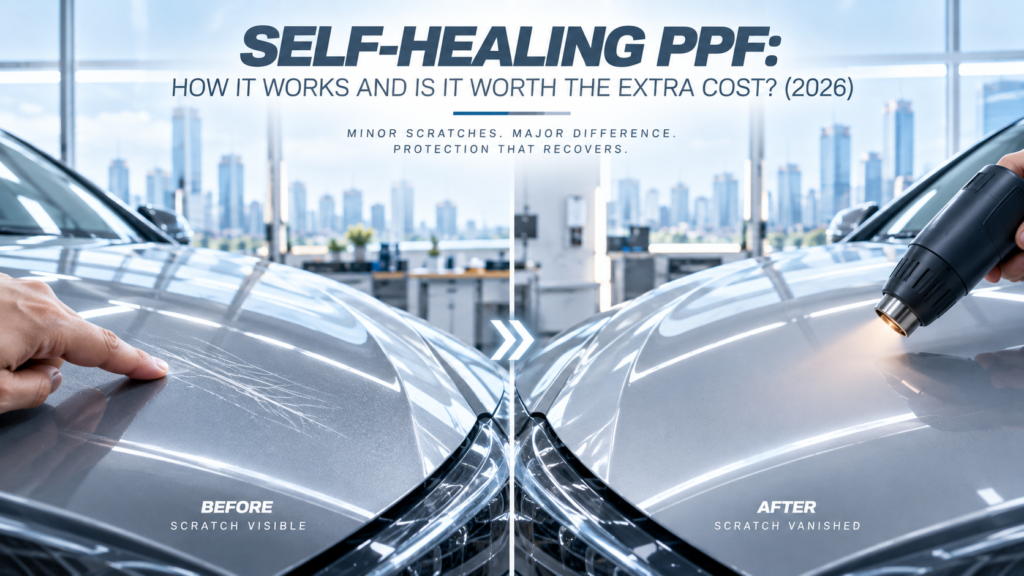
The technology works because the film’s outer layer is made from thermoplastic polyurethane (TPU), a material that softens and reshapes itself when exposed to heat above roughly 120-160°F — heat that can come from direct sunlight, warm water, or a heat gun.
This guide explains exactly how self-healing PPF works at a molecular level, what it can and can’t fix, how much more it costs than standard film, and whether the upgrade is genuinely worth it for Malaysian drivers.
How Self-Healing PPF Actually Works
When PPF sustains a light scratch, the elastomeric polymers in its top coat respond to heat by softening at a molecular level. This softening allows the polymer chains to regain freedom of movement, flowing microscopically to smooth over the scratch. Once the heat source is removed, the polymer chains cool and bond back together, effectively erasing the damage from view. The process activates at approximately 140 to 160°F on most premium films, a temperature that direct sunlight alone can reach on a hot dashboard or hood surface.
Key fact: Malaysia’s consistent, intense equatorial sun means most light scratches on self-healing PPF heal passively within hours of normal daytime parking, without any owner intervention required — a genuine climate advantage over cooler markets where scratches may need active heat-gun treatment to trigger healing.
What Self-Healing PPF Can and Can’t Fix
It’s worth being precise about the scope of this technology, since it’s easy to overestimate what it actually does.
Self-healing PPF can fix:
- Light swirl marks from washing
- Fine scratches from contact with soft debris or fingernails
- Minor surface scuffs from everyday contact
Self-healing PPF cannot fix:
- Deep scratches that penetrate through the film to the paint underneath
- Rock chips or impact damage — this is handled by the film’s structural layer, which works whether or not the top coat is self-healing
- Cuts or tears in the film itself
This distinction matters because PPF actually does two separate jobs. The structural layer absorbs physical impact from rock chips and road debris — that’s the core function of any PPF, self-healing or not. The self-healing top coat is a cosmetic bonus sitting on top of that structural layer, specifically addressing surface-level marks rather than impact damage.
How to Manually Trigger Healing
For scratches that don’t heal passively from ambient heat, or in cooler indoor conditions, a heat gun on low setting or a hair dryer held 4-6 inches from the surface, moved slowly across the affected area, activates the healing process within seconds as the top coat softens. Keeping the tool moving prevents overheating any single spot. Warm water works similarly for lighter marks, giving owners a simple, low-effort way to actively speed up healing rather than waiting for ambient conditions to do it passively.
How Much Does Self-Healing PPF Cost?
Self-healing PPF typically costs 40-70% more than standard PPF, reflecting both a more advanced film formulation and generally more meticulous installation requirements. Based on current international pricing data:
| Coverage Level | Standard PPF | Self-Healing PPF |
|---|---|---|
| Partial front coverage | Lower end of range | 40-70% premium over standard |
| Full front end | Mid-range | 40-70% premium over standard |
| Full body wrap | Higher end of range | 40-70% premium over standard |
Per square foot, standard films typically run in the lower pricing tier while premium self-healing films command a meaningfully higher rate per square foot, reflecting the added topcoat technology and the 7-12 year warranties that often accompany premium self-healing products, compared to shorter warranty periods on basic films.
Does the Extra Cost Actually Pay Off?
For most daily drivers, self-healing PPF pays for itself by avoiding repeated professional touch-ups. Professional paint touch-up work for accumulated swirl marks and light scratches commonly costs a meaningful sum per incident, and repetitive bodywork over several years doesn’t just cost money directly — it also diminishes resale value each time paint gets reworked. Self-healing PPF is best framed as prevention against these repeated smaller costs, not a one-time luxury purchase.
Self-healing PPF is worth the upgrade if:
- You drive daily and your car regularly picks up light swirls from washing or road grime
- You want your car to consistently look freshly detailed without constant touch-up visits
- You’re already committed to PPF and the incremental cost difference is proportionally small relative to the full installation
Standard PPF may be sufficient if:
- Your car is driven infrequently or garage-kept most of the time
- Budget is the primary constraint and structural impact protection matters more than cosmetic self-repair
- You’re comfortable with occasional professional detailing to address surface marks manually
Lifespan and Warranty Differences
Quality self-healing PPF typically lasts 5-10 years, compared to 3-5 years for standard film before replacement becomes necessary. This longer lifespan is a meaningful part of the value calculation, since it means fewer total installation cycles over the years you own the vehicle. Premium self-healing products from established manufacturers often carry warranties stretching up to 10 years, covering issues like yellowing, cracking, and staining — giving buyers genuine assurance beyond the self-healing feature itself.
Self-Healing PPF vs Ceramic Coating: Different Jobs Entirely
A common point of confusion worth clarifying directly: self-healing PPF and ceramic coating solve different problems and aren’t interchangeable. PPF’s structural layer absorbs physical impact and reduces paint damage from rock chips and road debris. Ceramic coating helps with easier cleaning and water behavior (hydrophobic properties), but it does not stop rock chips or provide meaningful impact protection. Many owners combine both — self-healing PPF on high-impact front panels, ceramic coating over the rest of the body — rather than treating them as competing options. Our PPF vs Ceramic Coating Malaysia guide breaks down this comparison in more detail.
Maintenance Tips for Self-Healing PPF
Getting the most out of self-healing PPF requires a few specific maintenance habits:
- Wash regularly with pH-neutral soap — this keeps dirt and contaminants from embedding into the film surface, since harsh detergents or abrasive brushes can scratch or dull the protective top coat
- Avoid automatic car washes with hard brushes — these introduce exactly the kind of fine scratches the self-healing property is meant to address, working against the film rather than with it
- Apply a PPF-specific spray sealant periodically — some owners find this extends the film’s glossy appearance and hydrophobic performance between full details
- Let the sun do the work — in Malaysia’s climate specifically, simply parking outdoors on a hot day is often enough to trigger passive healing without any manual intervention needed
Brand and Quality Differences Worth Knowing
Not all self-healing PPF heals equally — top coat formulation varies significantly between manufacturers, which is exactly why the PPF brand you choose matters as much as whether you opt for self-healing at all. Premium films from established brands tend to reflow more quickly and maintain better optical clarity over repeated healing cycles compared to budget self-healing products, where the healing effect can be less complete or take noticeably longer to activate.
Common Myths About Self-Healing PPF
“Self-healing PPF fixes any damage, including deep scratches and chips.” Not accurate. The self-healing property only addresses light, surface-level scratches and swirl marks. Deep scratches that penetrate through the film, and rock chip impact damage, are handled separately by the film’s structural layer, not the healing topcoat.
“You need a heat gun every time to activate healing.” Not necessarily, especially in Malaysia. Ambient sunlight alone frequently provides enough heat to trigger passive healing within hours, though a heat gun or hair dryer can speed up the process for stubborn marks or in cooler conditions.
“Self-healing PPF and ceramic coating do the same thing.” They solve genuinely different problems. PPF’s structural layer absorbs physical impact from debris; ceramic coating improves cleaning ease and water behavior but provides no meaningful impact protection. Many owners use both together rather than choosing one over the other.
“All self-healing PPF brands perform identically.” Topcoat formulation varies meaningfully between manufacturers, with premium films generally reflowing faster and maintaining clearer optical quality over repeated healing cycles than budget alternatives.
Is Self-Healing PPF Worth It for Your Specific Car?
The honest answer depends on how you actually use your vehicle. A daily-driven car exposed to regular washing, road grime, and general handling sees the most value from self-healing PPF, since the cumulative savings from avoided touch-up visits compound over years of ownership. A weekend car or one that’s mostly garage-kept sees proportionally less benefit, since it simply won’t accumulate the kind of light surface wear the technology is designed to address. If you’re already budgeting for PPF installation regardless, the incremental cost of upgrading to a self-healing top coat is often smaller relative to the full installation price than it first appears — making it a reasonable default upgrade for most daily drivers rather than a niche luxury add-on.
Watching Self-Healing PPF in Action
One detail that convinces most skeptical buyers is simply seeing the process happen. A fresh light scratch, exposed to warm water or a heat gun on low setting, visibly smooths away within seconds as the top coat softens and reflows — a real-time demonstration that makes an otherwise abstract chemistry explanation immediately tangible. Many installers will demonstrate this directly during a consultation, deliberately creating a light test mark and healing it in front of the customer, which is often the single most persuasive part of the entire self-healing PPF pitch.
Final Thoughts
Self-healing PPF is a genuine, scientifically real technology, not a marketing gimmick — the topcoat’s thermoplastic polyurethane physically softens and reflows with heat, closing light scratches through an actual molecular process rather than a visual trick. For daily drivers who want their car to consistently look freshly detailed without constant professional touch-ups, the 40-70% cost premium over standard PPF is generally worth paying, particularly given Malaysia’s climate does much of the passive healing work automatically through ambient heat alone. For less frequently driven or garage-kept vehicles, standard PPF remains a perfectly sound choice, since the core structural protection against rock chips and impact damage is identical either way — the self-healing top coat is a cosmetic upgrade layered on top, not a replacement for the film’s primary job.
Frequently Asked Questions
Is self-healing PPF actually real, or is it just marketing?
It’s genuinely real. The topcoat uses elastomeric polymers that physically soften and reflow when heated above roughly 140-160°F, closing light scratches through an actual molecular process, not a visual illusion.
How much more does self-healing PPF cost than standard PPF?
Typically 40-70% more, depending on the specific film brand and installer, reflecting the more advanced topcoat formulation and often longer accompanying warranties.
Can self-healing PPF fix rock chips?
No. Rock chip and impact protection comes from the film’s structural layer, which works the same regardless of whether the top coat is self-healing. Self-healing specifically addresses light surface scratches and swirl marks, not impact damage.
Does self-healing PPF work automatically in Malaysia’s climate?
Often yes. Malaysia’s consistent, intense sun frequently provides enough ambient heat to trigger passive healing on light scratches within hours of normal outdoor parking, without needing a heat gun.
How long does self-healing PPF last compared to standard film?
Quality self-healing PPF typically lasts 5-10 years, compared to 3-5 years for standard film, often backed by warranties covering yellowing, cracking, and staining for up to a decade.