
How to claim windscreen insurance in Malaysia turns out to be a far simpler process than most drivers expect — no police report, no lengthy assessment period, and in many cases, zero out-of-pocket payment if you use a panel workshop. Yet a surprising number of drivers either don’t realize they have this coverage, or assume the process is as involved as a standard accident claim, and end up paying for a windscreen repair themselves unnecessarily.
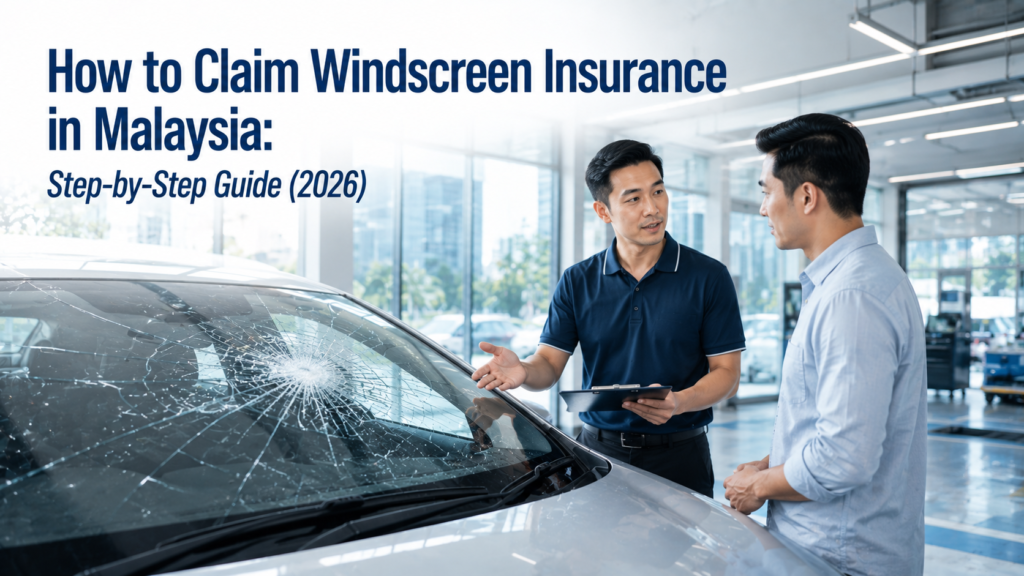
This guide walks through exactly how to claim windscreen insurance in Malaysia, from confirming your coverage to getting your windscreen fixed, along with the documents you’ll need and the mistakes that trip up first-time claimants.
Step 1: Confirm You Actually Have Windscreen Coverage
Before anything else, check whether the windscreen add-on is actually on your active policy. Open your insurance cover note or policy schedule and look for a line item labeled “windscreen cover,” “windscreen endorsement,” or similar wording. If you’re unsure, a quick call to your insurer’s hotline can confirm this in a few minutes. This step matters because windscreen coverage is an optional add-on to comprehensive insurance, not something included automatically — if it isn’t listed on your policy, you can’t file a claim under it, regardless of how minor the damage is.
Step 2: Document the Damage
Once you’ve confirmed coverage, take clear photos of the crack or chip from multiple angles — a wide shot showing the full windscreen, plus close-ups of the specific damage. Include a photo of your car’s registration plate in the same set for reference. This documentation isn’t just a formality; it gives your insurer and the glass shop a clear record of the damage before any repair work begins, which helps avoid disputes later about the extent or cause of the damage.
Step 3: Contact Your Insurance Company
Call your insurer’s dedicated claims hotline, or use their mobile app if available, to report the windscreen damage. Have your policy number, IC number, and vehicle registration number ready, since these are typically requested immediately when you report the claim. Most Malaysian insurers maintain a specific line for windscreen claims separate from general accident claims, reflecting how much simpler this process is compared to a standard collision claim.
Step 4: Get Approval and a Claim Reference Number
The insurer will review your report and issue a claim reference number, then direct you to an approved glass shop or panel workshop. Some insurers allow you to choose your own glass shop, but using one from the approved panel generally simplifies the rest of the process, since these shops already have an established billing relationship with your insurer.
Step 5: Visit the Approved Glass Shop
Bring your IC, a copy of your insurance policy, and the claim reference number to the workshop. The technician will assess the damage on-site and determine whether a repair (for smaller chips that haven’t spread) or a full replacement is needed. This assessment typically happens quickly, often on the same visit rather than requiring a separate appointment.
Step 6: Get the Repair or Replacement Completed
Timing depends on the extent of the damage — a small chip repair can take as little as 30 minutes, while a full windscreen replacement typically takes longer, often a few hours depending on the vehicle and glass availability. Panel workshops are generally cashless, meaning the workshop bills your insurer directly rather than requiring you to pay upfront and seek reimbursement afterward.
Panel vs Non-Panel Workshops: Why It Matters for Payment
This distinction affects your out-of-pocket experience more than most drivers realize. Panel workshops typically operate on a cashless basis — the workshop bills your insurer directly, meaning you walk away without paying anything beyond your policy’s excess, if applicable. Non-panel workshops often require you to pay upfront and then seek reimbursement from your insurer afterward, which adds both a cash flow burden and additional paperwork. If minimizing upfront cost and hassle matters to you, checking whether a shop is on your insurer’s approved panel before booking is worth the extra few minutes.
Does Filing a Windscreen Claim Affect Your NCD?
No — and this is one of the most searched questions among Malaysian drivers for good reason. As long as the claim is processed specifically under the windscreen endorsement (rather than under your main Own Damage coverage), your No Claim Discount remains completely unaffected. For a driver with a 55% NCD, this distinction is genuinely significant, since losing that discount would mean paying meaningfully more at the next renewal. One detail worth knowing: after a windscreen replacement claim, some insurers require you to reinstate (repurchase) windscreen cover for the remaining policy period if you want to stay protected until your next renewal — it’s worth asking your insurer specifically about this when you file.
What Documents Do You Need?
Requirements vary slightly by insurer, but generally you’ll need:
- Your identity card (IC)
- A copy of your insurance policy or cover note
- The claim reference number issued by your insurer
- Photos of the damage (often submitted when you first report the claim)
Notably, unlike a standard accident claim, a police report is typically not required for a windscreen-only claim, unless the damage resulted from a road accident involving another vehicle rather than an isolated stone chip or crack. This is one of the clearer ways windscreen claims are simpler than general accident claims — our step-by-step car insurance claims guide covers the more involved documentation process required for standard accident claims, for comparison.
Don’t Forget: Tint Reinstallation
If your windscreen had tint film applied and it needs replacement, the tint is removed along with the old glass during the replacement process. Whether reinstallation is covered under your windscreen add-on varies by insurer — some include it, others don’t — so it’s worth budgeting for potential re-tinting costs separately, or confirming this specific detail with your insurer before the replacement happens. If you want a broader understanding of what your windscreen coverage does and doesn’t include, our Windscreen Coverage in Malaysia guide covers this and other coverage specifics in more depth.
Common Mistakes That Slow Down a Windscreen Claim
- Not checking for windscreen coverage before assuming you’re protected — if the add-on isn’t on your policy, you cannot claim under it, no matter how the damage occurred
- Repairing the glass yourself before the claim is approved — attempting a DIY fix or visiting an unapproved shop before official approval can complicate or invalidate the claim
- Skipping documentation — clear photos before the repair help avoid disputes about the extent of damage, particularly if using a non-panel workshop
- Assuming a police report is always required — for a simple stone chip or crack unrelated to a collision, this typically isn’t necessary, and requesting one unnecessarily just adds delay
- Forgetting to ask about tint reinstallation — this is easy to overlook until after the replacement is done and the tint is already gone
Common Myths About Claiming Windscreen Insurance
“Claiming windscreen insurance will hurt my No Claim Discount just like any other claim.” This is the most persistent misconception on this topic. As long as the claim goes through the windscreen endorsement specifically, it’s treated separately from Own Damage claims and doesn’t affect your NCD at all.
“I need a police report no matter what caused the damage.” Not for isolated stone chips or cracks from road debris. A police report is generally only necessary if the windscreen damage resulted from an actual road accident involving another vehicle.
“I’ll need to pay out of pocket and wait for reimbursement.” This depends entirely on whether you use a panel or non-panel workshop. Panel workshops typically bill your insurer directly, meaning no upfront payment beyond any applicable excess.
“The claims process takes as long as a full accident claim.” Windscreen claims are generally much faster, since there’s no multi-party investigation involved — many claims, especially simple chip repairs, are resolved within the same day.
What If Your Claim Gets Rejected?
While windscreen claims are generally straightforward, rejections do occasionally happen — most commonly because the windscreen add-on wasn’t actually on the policy, the damage occurred before the coverage was added, or the claimed cause doesn’t match the physical evidence (for instance, damage that appears consistent with an accident rather than a simple stone chip). If your claim is rejected, ask your insurer for the specific reason in writing, and if you believe the rejection was made in error, most insurers have an internal appeals or review process before escalating to Malaysia’s Ombudsman for Financial Services. Keeping your own copies of all photos, correspondence, and the original claim reference number makes this process considerably easier if a dispute arises.
How Long Does the Whole Process Take?
For a straightforward claim at a panel workshop, the entire process — from reporting the damage to walking away with a repaired or replaced windscreen — can often be completed within the same day, particularly for a simple chip repair. A full replacement may take somewhat longer depending on glass availability for your specific vehicle model, but the claims approval itself is typically fast, since windscreen damage doesn’t require the same level of investigation as a multi-vehicle accident claim.
Using a Mobile or On-Site Windscreen Service
Some Malaysian windscreen specialists offer mobile service, sending a technician to your home, office, or even a shopping mall car park to carry out the repair or replacement on-site, rather than requiring you to drive to a workshop with an already-damaged windscreen. This can be a genuinely convenient option when learning how to claim windscreen insurance in Malaysia, particularly for a crack that’s spreading and makes driving to a workshop feel risky. Not every insurer or approved shop offers this service, so it’s worth asking specifically when you report your claim whether mobile service is available under your policy.
Final Thoughts
How to claim windscreen insurance in Malaysia comes down to a straightforward six-step process: confirm your coverage, document the damage, contact your insurer, get approval and a reference number, visit an approved glass shop, and get the repair or replacement completed. Unlike a standard accident claim, this process typically skips the police report requirement, doesn’t touch your No Claim Discount, and — if you use a panel workshop — often involves no upfront payment at all. Knowing these steps before damage happens means you won’t waste time or money handling a cracked windscreen the hard way when a much simpler, cheaper path is already built into your policy.
Frequently Asked Questions
Do I need a police report to claim windscreen insurance in Malaysia?
Generally no, unless the damage resulted from a road accident involving another vehicle. A simple stone chip or crack from road debris typically doesn’t require a police report.
Will claiming windscreen insurance affect my No Claim Discount?
No, as long as the claim is processed specifically under the windscreen endorsement rather than your main Own Damage coverage, your NCD remains unaffected.
Do I need to pay anything upfront when claiming windscreen insurance?
At a panel workshop, usually no — the workshop bills your insurer directly. At a non-panel workshop, you may need to pay upfront and seek reimbursement afterward.
How long does a windscreen insurance claim take in Malaysia?
A simple chip repair can be completed in as little as 30 minutes, while a full replacement may take a few hours depending on glass availability, with the overall claim often completed within the same day.
Is tint reinstallation included in a windscreen replacement claim?
This varies by insurer — some include it, others don’t — so it’s worth confirming this specific detail with your insurer before the replacement is carried out.
Pingback: How to Prevent Windscreen Chips and Cracks While Driving